
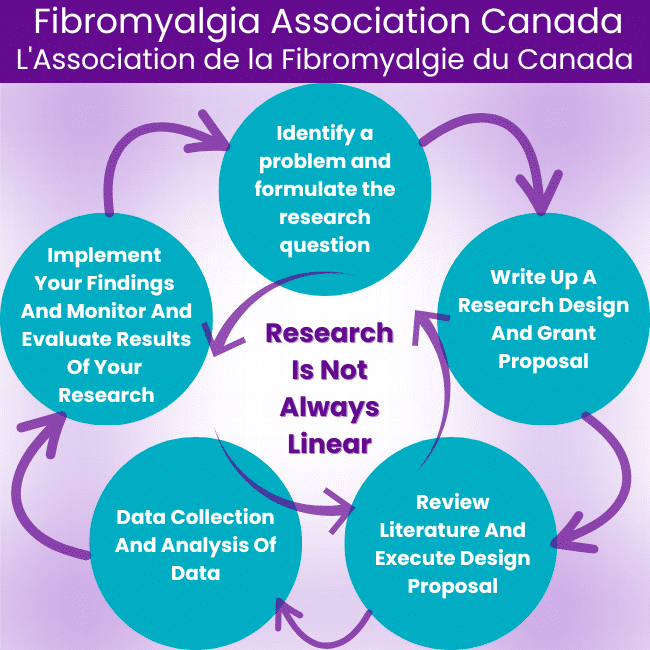
The Cycle of Research
The cycle of research is a continuous, non-linear process that begins with identifying a problem or question and moving through stages such as investigation, analysis, and sharing results.
Research about fibromyalgia must include people who live with fibromyalgia.
When lived experience is part of the research team, studies are more relevant, respectful & impactful.

Circulating microRNA expression signatures accurately discriminate myalgic encephalomyelitis from fibromyalgia and comorbid conditions
Myalgic Encephalomyelitis (ME)( also known as Chronic Fatigue Syndrome (CFS)), and fibromyalgia (FM) are two long-term illnesses with complex symptoms that affect multiple parts of the body. Due to their overlapping symptoms and lack of clear biomarkers (i.e., blood tests), these conditions are...

What Do Doctors Know About Fibromyalgia and How Do They Treat It?
Doctors don’t always agree on how to treat fibromyalgia (FM). There is a lot of variety in the treatments they recommend, and what works for one person may not work for another. Some treatments, like exercise, work well for many people, but others, like opioids or alternative therapies, are rarely suggested. Many doctors also don’t follow clear guidelines for FM, which can make it harder for patients to get consistent care. This study looked at how doctors think about FM, how they treat it, and the challenges patients face when seeking help.

Combination analgesic development for enhanced clinical efficacy (the CADENCE trial): a double-blind, controlled trial of an alpha-lipoic acid-pregabalin combination for fibromyalgia pain.
Fibromyalgia pain may respond to different drugs. However only 40 – 60 % of people with fibromyalgia notice the drugs decrease their pain. Those who do see a decrease, experience a reduction of …

How Effective Are Alternative Treatments for Fibromyalgia
This research shows that some alternative medicine treatments work better than standard treatments for helping with pain, anxiety, and sleep in some people with fibromyalgia.
Check it out to see what alternative treatment works best.

What You Need to Know About Scientific and Medical Journals?
Scientific or Medical Journals are publications whose goal it is to expand and facilitate inquiry into scientific and medical fields through publishing research, findings, or studies conducted by academic experts and / or students in their specific fields.

Is There A Diagnostic Blood Test to Tell if I Have Fibromyalgia AND Is it a Good Test?
Currently, there is no definitive blood test to diagnose fibromyalgia. Diagnosis is based on a combination of the individual’s reported symptoms, a physical examination that identifies signs associated with the condition, and diagnostic tests—such as blood tests, X-rays, and scans—that help confirm or rule out other potential conditions.

Intramuscular pressure is almost three times higher in fibromyalgia patients
The exact cause of fibromyalgia (FM) is unknown. The most common understanding is central sensitization where the brain processes pain signals abnormally which then causes the pain.

Low Dose Naltrexone (LDN) Plain Language Summary
Lay Summary of a systemic review to better understand whether Low Dose Naltrexone may be a helpful option for people living with fibromyalgia.

Pain relief by targeting nonrestorative sleep in fibromyalgia: a phase 3 randomized trial of bedtime sublingual cyclobenzaprine
Pain Relief by Targeting Nonrestorative Sleep in Fibromyalgia
This Phase 3 randomized trial examines the role of nonrestorative sleep in fibromyalgia and investigates a bedtime sublingual formulation of cyclobenzaprine as a potential approach to addressing sleep-related symptoms. By focusing on sleep physiology rather than pain alone, the study contributes to ongoing research into the underlying mechanisms of fibromyalgia and emerging treatment strategies.
FAC shares this research in lay language to support informed conversations and encourage members to explore current evidence in fibromyalgia care.

Passive transfer of fibromyalgia symptoms from patients to mice
Researchers found that the passive transfer of IgG from fibromyalgia patients to mice triggered key symptoms, suggesting fibromyalgia may have an autoimmune component. Read more to see the limitations of this study.
 EN
EN  FR
FR