
En cours de révision
FAC is currently in the process of reviewing each of these symptoms and list of co-occuring conditions and comorbidities. We're gathering information that's backed by research and will update this post soon.
Nous nous engageons à vous fournir toutes les informations les plus précises et les plus récentes sur la fibromyalgie et sur les soins à apporter à votre santé.
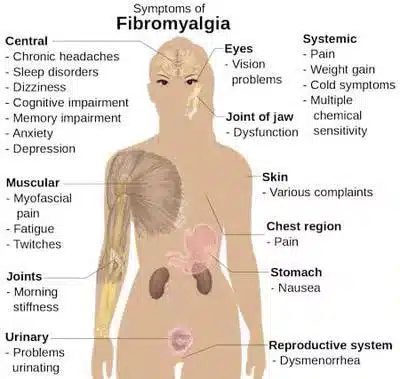
Saviez-vous qu’il existe plus de 200 symptômes et affections concomitantes associés à la fibromyalgie ?
Source: fibromapp.com, moregooddays.com
This highlights the complexity of fibromyalgia, which manifests with a plethora of symptoms and co-occurring conditions. Each individual's experience with these conditions is unique.
La fibromyalgie se caractérise par sa complexité et présente une grande diversité de symptômes, dont la nature et la gravité peuvent varier considérablement d'une personne à l'autre. Les recherches actuelles suggèrent que certains symptômes de la fibromyalgie pourraient être liés à des anomalies du fonctionnement cérébral, à un dérèglement du système immunitaire et à une sensibilisation centrale. 1.
Below is a compilation of over 200+ symptoms and co-occurring conditions associated with fibromyalgia. Are any of these familiar to you? Remember, not all individuals with fibromyalgia will experience every symptom, and some symptoms may be shared with other conditions. Therefore, it's crucial to discuss any concerns with your healthcare provider to rule out alternative diagnoses.
Many of these conditions are linked to an imbalance in the body's systems, such as dysregulation of the nervous system. Consequently, while the symptoms and associated conditions may appear unrelated, interventions that alleviate pain may also benefit other conditions and symptoms.
It's important to note that the complexity of fibromyalgia makes categorizing symptoms challenging. Our body systems are incredibly intricate and interconnected. Some symptoms listed here are separate conditions that commonly co-occur, while others may appear contradictory, such as experiencing both high and low blood pressure. This variability can be attributed to the unique expression of the condition in each individual, pre-existing health conditions, and the influence of nervous system activity.
Pour compliquer encore davantage la situation, les personnes atteintes de fibromyalgie peuvent également être confrontées à plusieurs autres affections, qu'elles prennent ou non des médicaments. Des études indiquent que les symptômes tendent à s'aggraver avec le nombre de médicaments prescrits, ce qui suggère que certains symptômes pourraient être attribuables à leurs effets secondaires. 2.
Symptômes généraux
- Chest pains
- Heart palpitations
- Irregular heartbeat
- High blood pressure
- Low blood pressure
- Dizziness upon standing (orthostatic hypotension)
- Postnasal drip
- Recurrent infections
- Slow healing
- Susceptibility to colds and flu
Neurological Symptoms
- Vertigo and dizziness
- Headaches
- Migraines
- Syncope (fainting)
- Seizures
- Stroke-like symptoms
- Transient ischemic attacks (mini-strokes)
- Restless legs syndrome
- Tingling and numbness
Eye, Ear & Mouth Symptoms
- Dry eyes and mouth
- Vision changes
- Puffy eyes
- Dark circles under eyes
- Eye twitching
- Conjunctivitis
- Blepharitis (eyelid inflammation)
- Keratitis (cornea inflammation)
- Uveitis (uvea inflammation)
- Optic neuritis (inflammation of the optic nerve)
- Cataracts
- Glaucoma
- Macular degeneration
- Retinal detachment
- Vision loss
- Teeth grinding (bruxism)
- Temporomandibular joint disorder (TMJ)
- Dental problems
- Gum disease
- Tooth decay
- Mouth ulcers
- Hearing loss
Urogenital Symptoms
- Frequent urination
- Bladder spasms
- Interstitial cystitis
- Swelling and bloating
- Water retention
- Candida overgrowth
- Urinary tract infections
- Peptic ulcers
- Gallbladder dysfunction
- Liver enzyme elevations
- Pancreatitis
- Kidney stones
- Bladder dysfunction
- Prostatitis
- Endometrial hyperplasia
Respiratory Symptoms
- Dry or burning throat
- Breathing difficulties
- Voice changes
- Laryngitis
- Swollen lymph nodes
- Chronic sinusitis
- Recurrent bronchitis
- Pneumonia
- Asthma exacerbations
- Swollen glands
- Sore throat
- Shortness of breath
- Acid reflux
- Esophageal spasms
- Hypersensitivity pneumonitis
- Pleurisy (inflammation of the lining of the lungs)
- Cough
Hair & Nail Symptoms
- Hair loss
- Brittle nails
- Nail ridges
- Nail discoloration
Cognitive Symptoms
- Cognitive dysfunction
- Brain fog
- Impaired judgment
- Difficulty making decisions
- Difficulty planning or organizing
- Difficulty with multitasking
- Disorientation
- Confusion
- Hallucinations
- Delirium
- Derealization (feeling of unreality)
- Depersonalization (feeling detached from oneself)
- Obsessive-compulsive tendencies
- Phobias
- Paranoia
- Suicidal thoughts
- Self-harm tendencies
- Agoraphobia (fear of leaving spaces that a person considers safe, such as their home)
- Social anxiety
- Generalized anxiety disorder
- Depression
General Sensitivities
- Sensitivity to cold/heat
- Sensitivity to odors/odor intolerance
- Photophobia (sensitivity to light)
- Photosensitivity (sensitivity to sunlight)
- Phonophobia (sensitivity to sound)
- Temperature regulation problems
- Night sweats
- Hot flashes
- Allergies
- Chemical sensitivities
- Taste disturbances
- Sensory overload
- Hyperesthesia (increased sensitivity of the senses)
- Hypoesthesia (reduced sensitivity of the senses)
Symptômes de la douleur
- Widespread pain
- Raideur matinale
- Muscle twitching
- Muscle knots, cramping, weakness
- Reduced tolerance for exercise
- Exercise-induce pain
- Muscle stiffness
- Carpal tunnel syndrome
- Tendinitis
- Plantar fasciitis
- Heel spurs
- Bursitis
Perception Symptoms
- Tinnitus (ringing in the ears)
- Cognitive difficulties
- Memory problems
- Difficulty concentrating
- Disorientation
- Feeling of being overwhelmed
- Brain fog
- Speech problems
- Balance issues
- Coordination problems
Emotional Symptoms
- Anxiety
- Depression
- Mood swings
- Irritability
- Panic attacks
- Personality changes
- Emotional sensitivity
- Stress intolerance
Gastrointestinal Symptoms
- Digestive disorders
- Abdominal pain
- Bloating
- Constipation
- Diarrhea
- Irritable bowel syndrome (IBS)
- Nausée
- Acid reflux
- Weight changes
- Prise de poids
- Weight loss
- Appetite changes
- Cravings for carbohydrates and sugar
- Hypoglycemia (low blood sugar)
- Hyperglycemia (high blood sugar)
- Insulin resistance
- Nutritional deficiencies
- Vitamin D deficiency
- Anemia
- Heartburn
- Gastritis
- Hemorrhoids
Hormonal Symptoms
- Menstrual problems
- Premenstrual syndrome (PMS)
- Painful periods
- Heavy menstrual bleeding
- Pelvic pain
- Endometriosis
- Adrenal fatigue
- Hormonal imbalances
- Low libido
- Erectile dysfunction
- Infertility
Skin (dermal) Symptoms
- Skin sensitivities
- Rashes
- Itching
- Bruising easily
- Spider veins
- Varicose veins
- Mottled skin
- Raynaud's phenomenon
- Skin infections
- Paresthesia (pins and needles)
- Burning sensations
- Electric shock sensations
- Scalp tenderness
- Seborrheic dermatitis
- Eczema
- Psoriasis
- Hives (urticaria)
- Skin ulcers
- Pressure sores
- Scar tissue pain
- Keloid formation
- Hyperpigmentation
- Hypopigmentation
- Stretch marks
- Acne
- Rosacea
- Flushing
- Edema (swelling)
- Lymphedema
Sleep & Energy Symptoms
- Fatigue (made worse by physical
- Activity level decreased to less than 50% of pre-illness activity level
- Sleep disturbances
- Sleep apnea
- Insomnia
- Hypersomnia (excessive sleepiness)
- Sleep disturbances
- Non-restorative sleep
- Nightmares
- Sleep paralysis
Tu n'es pas seul
After perusing this extensive list, you might feel the need to rest! While it may appear overwhelming, it's essential to understand that this list is not exhaustive, and each person's experience with fibromyalgia is unique. Furthermore, it's likely that you will only encounter a fraction of these symptoms!
Keep in mind that having fibromyalgia does not necessarily entail experiencing every item on this list. Whether this information is new to you or you've been living with fibromyalgia for some time, it can be beneficial and reassuring to track your symptoms. If you notice any of these symptoms, it's important to discuss them with your healthcare team to ensure that there isn't another underlying condition requiring attention.
Références
- Ceko M, Bushnell MC, Gracely RH. Neurobiology underlying fibromyalgia symptoms. Pain Res Treat. 2012;2012:585419.
- Rivera J, Vallejo MA. Fibromyalgia is associated to receiving chronic medications beyond appropriateness: a cross-sectional study. Rheumatol Int. 2016 Dec;36(12):1691-1699.
 FR
FR  EN
EN