
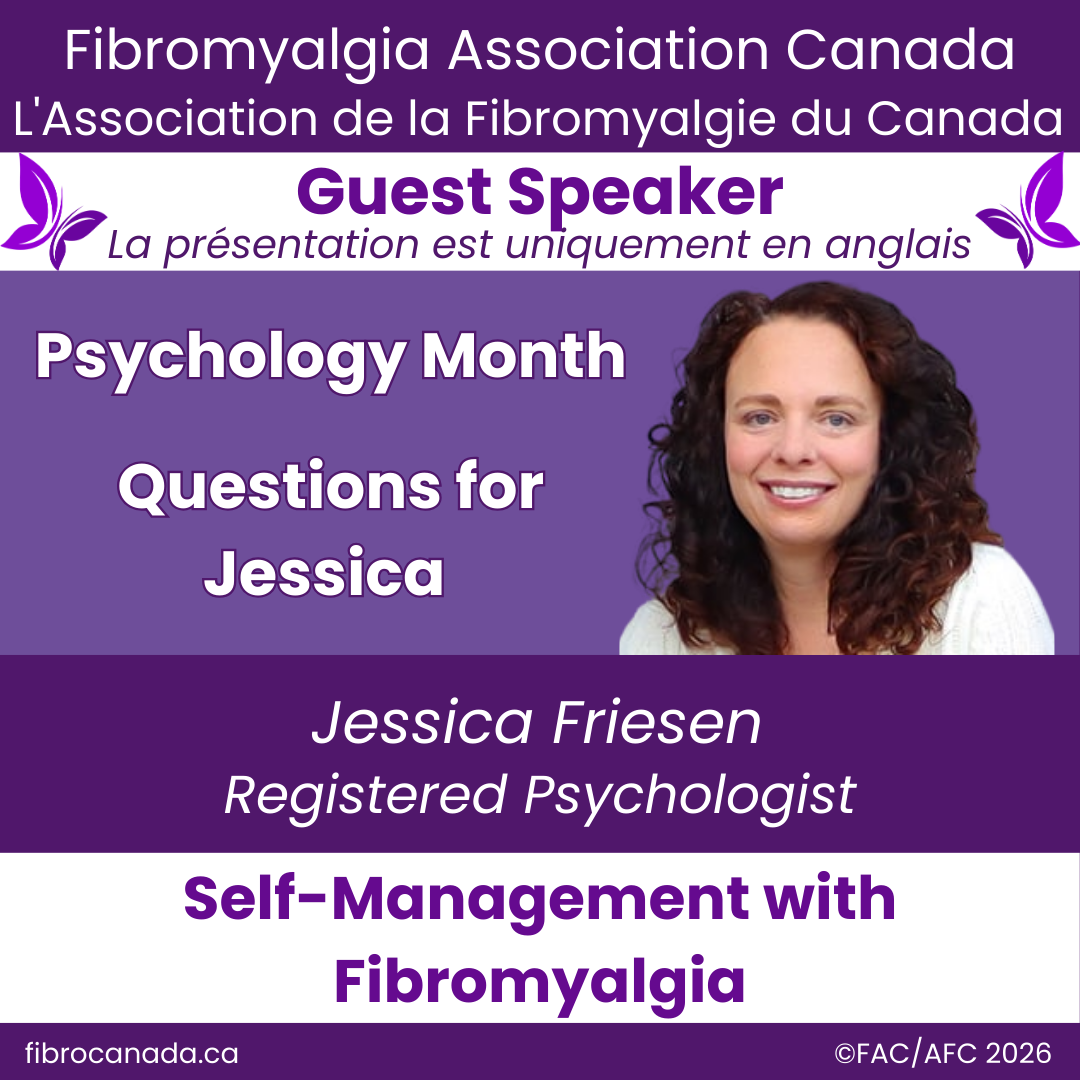
Was held on February 26, 2026 @ 12 pm ET.
What better month to ask your psychology questions than February - Psychology Month
Join FAC for a question and answer session with Jessica Friesen a Registered Psychologist.
February is Psychology Month, a time to recognize the vital role mental and emotional well-being play in living well with fibromyalgia. Living with chronic pain is not simply a physical experience. It affects sleep, concentration, mood, relationships, work capacity, motivation, and overall quality of life. The unpredictability of flares and symptom changes can create ongoing stress and uncertainty. Over time, this can lead to feelings of frustration, isolation, grief, anxiety, or even self-doubt.
Recherche continues to show that the nervous system, stress response, and emotional health are closely connected to how pain is experienced and processed. Understanding this connection is not about suggesting that your fibromyalgia is pain is not "real” Rather, it acknowledges the complex interaction between the brain and body. When we learn how stress, thoughts, emotions, and behaviors influence pain pathways, we gain practical tools to better manage symptoms and improve daily functioning. https://link.springer.com/article/10.1186/ar2146
Join Fibromyalgia Association Canada (FAC) for an interactive Psychology Month Question & Answer session with Jessica Friesen, Registered Psychologist, where we will explore the connection between mental health, chronic pain, and daily self-management. This session is designed to be informative, validating, and practical. Participants will have the opportunity to ask questions in a safe and supportive space while learning evidence-based strategies that can be incorporated into everyday life.
Topics may include pacing and avoiding burnout, managing anxiety around flare-ups, coping with sleep disruption, navigating difficult medical appointments, strengthening communication with loved ones, and addressing the emotional impact of living with an invisible illness. We will also explore strategies that help regulate the nervous system, reduce stress reactivity, and build resilience over time.
Jessica will discuss therapeutic approaches commonly used in chronic pain management, including Cognitive Behavioural Therapy (CBT), Acceptance and Commitment Therapy (ACT), Dialectical Behaviour Therapy (DBT), and Emotionally Focused Therapy (EFT). These approaches can help individuals reframe unhelpful thought patterns, develop emotional regulation skills, increase psychological flexibility, and reconnect with personal values , all of which are important components of long-term self-management.
Whether you are newly diagnosed or have been living with fibromyalgia for years, this session can be a valuable addition to your self-management toolbox. Psychological tools can complement medical care, physical activity, pacing strategies, and peer support. Mental health care is health care, and strengthening emotional well-being can positively influence physical symptoms, coping capacity, and overall quality of life.
This session is not therapy, but it is an opportunity to learn, reflect, and gain practical insights from a registered professional who understands the challenges of chronic pain. FAC is committed to offering educational opportunities that support the whole person, mind and body, and FAC recognizes the importance of compassionate, evidence-based care.
We invite you to join us for this engaging and supportive discussion as we mark Psychology Month together. To read more on "Anxiety and Fibromyalgia" go here https://fibrocanada.ca/en/fibromyalgia-and-anxiety
BIO: Jessica Friesen: Registered Psychologist
Jessica is a Registered Psychologist with a warm and supportive approach to therapy. She earned her Master’s in Psychology from Walden University and holds Bachelor’s degrees in Developmental Art and Education from the University of Calgary. She works with individuals, couples, families, and groups, using evidence-based approaches like Cognitive Behavioural Therapy (CBT), Dialectical Behaviour Therapy (DBT), Acceptance and Commitment Therapy (ACT), and Emotionally Focused Therapy (EFT).
Jessica enjoys helping people navigate challenges such as anxiety, depression, ADHD, trauma, life transitions, burnout, and chronic pain. Her specialties include:
- Depression and Anxiety
- Trauma and PTSD Treatment
- Decision making and career and life goal planning
- Grief counselling
- Adult ADHD Therapy
- Obsessive Compulsive Disorder (OCD) Therapy
She understands that these challenges can affect both the body and mind and works with clients to build coping strategies, improve emotional well-being, and regain a sense of control. Her approach is tailored to each person, creating a safe space where clients feel heard, supported, and empowered.
Watch the Replay
 FR
FR  EN
EN